

Superior Communication Services specializes in distributed antenna system (DAS) design and installation for commercial offices. We deliver scalable workplace technology solutions that ensure reliable cellular coverage in modern buildings. This guide covers how to choose a provider, verify credentials, understand costs, and avoid common pitfalls in office DAS projects.
How to Choose a DAS Provider
Selecting the right partner for your office infrastructure requires looking beyond basic installation capabilities. A distributed antenna system is a complex network that distributes a single cellular signal to multiple antennas throughout a building. The best providers combine deep engineering expertise with a proven track record in commercial environments. You need a firm that understands the unique challenges of office spaces, such as high-density user environments and the need for seamless roaming between floors.
Experience in Commercial Environments
Not all DAS installers are created equal. Some focus heavily on residential or small retail spaces, which do not translate well to large corporate offices. Look for a provider with specific experience in mid-to-large sized firms. Superior Communication Services specializes in working with organizations that have multiple locations and complex technology needs. Our team has over 50 years of combined industry experience tailoring solutions to individual customer needs.
Single-Source Capability
Managing multiple vendors for different parts of your technology stack creates friction and liability gaps. A strong provider offers a single point of contact for all low-voltage technologies. This includes network cabling, audio visual, and security. By choosing a firm that handles the entire scope, you ensure that the DAS integrates smoothly with your existing infrastructure. This approach reduces project risk and simplifies long-term maintenance.
What to Ask Before Committing
Before signing a contract, you must ask specific questions that reveal the depth of the provider's engineering process. Vague answers often indicate a lack of specialized expertise. You need to know how they approach design, testing, and future scalability.
Design Methodology
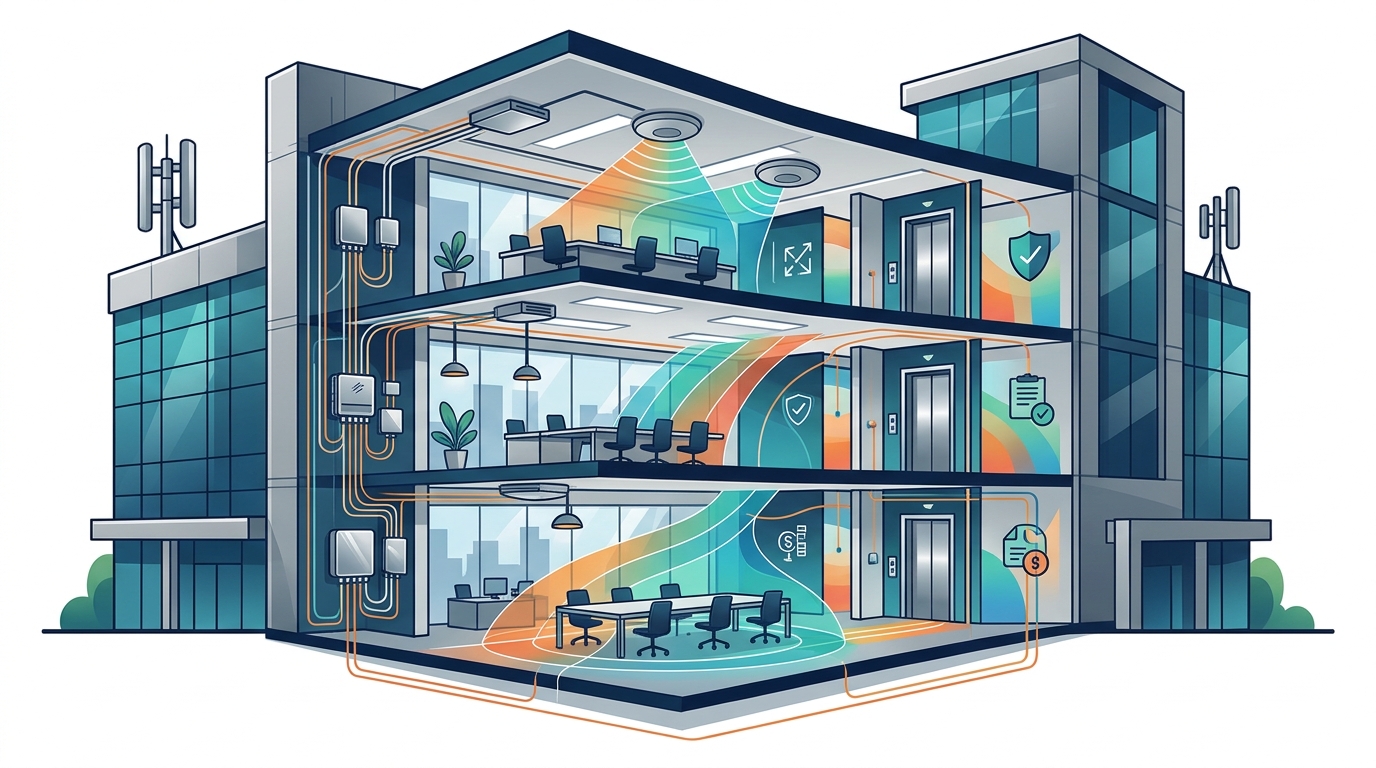
Ask how the provider performs site surveys. Do they use predictive modeling software, or do they rely on physical walk-throughs? A robust process involves both. Our wireless engineers use specialized software to perform comprehensive site surveys. We identify the best locations for access points and antennas to ensure maximum performance. This data-driven approach minimizes dead zones and ensures consistent coverage.
Scalability and Future-Proofing
Technology changes rapidly. Ask how the proposed solution will handle future carrier upgrades or increased user density. A good provider designs for the next five to ten years, not just today's needs. They should explain how the system can be expanded without requiring a complete overhaul. This forward-thinking approach protects your investment and ensures the system remains relevant as your business grows.
How to Verify Credentials
Credentials are a critical indicator of a provider's competence. However, not all certifications are created equal. You should verify that the individuals who will design and install your system hold relevant industry certifications. This ensures that the work meets professional standards and best practices.
Industry Certifications
Look for certifications from recognized bodies such as BICSI and AVIXA. BICSI RCDD (Registered Communications Distribution Designer) is a gold standard for structured cabling and network design. AVIXA CTS (Certified Technology Specialist) demonstrates expertise in audio visual and integrated systems. At Superior, our designers hold these certifications, ensuring that your project is led by qualified professionals. You can verify these credentials through the respective issuing organizations' online directories.
Project References
Credentials are important, but real-world results matter more. Ask for references from similar projects. Specifically, request references from clients in your industry or with similar building types. Speak to these clients about the provider's communication, adherence to schedule, and post-installation support. A reputable firm will provide these references willingly and will stand behind their past work.
The DAS Implementation Process
Understanding the implementation process helps you set realistic expectations and manage the project effectively. A professional DAS installation follows a structured workflow that ensures quality and minimizes disruption to your operations. The process typically involves design, build, and deployment phases.
Design Phase
The design phase begins with a needs assessment and site walk-through. Our engineers analyze your floor plans and review your technology requirements. We develop a detailed scope of work and construct a final bill of materials. This phase includes budgetary pricing and proposal development. The goal is to create a design that fits your space and budget while meeting performance targets.
Build and Deployment
Once the design is approved, the build phase begins. This involves coordinating with other trades, scheduling crews, and ordering materials. Our dedicated project team remains constant throughout the buildout. Each team is selected based on their skills and experience. The system is installed, configured, and tested. Finally, we deliver as-built drawings, test reports, and warranty documentation. This structured approach ensures a smooth transition from design to a fully operational system.
Cost Drivers for Office DAS
The cost of a DAS project varies widely based on several factors. Understanding these drivers helps you budget accurately and avoid surprises. There is no one-size-fits-all price, as each building and requirement is unique.
Building Size and Complexity
The square footage of the space is a primary cost driver. Larger buildings require more antennas, cabling, and equipment. Complexity also plays a role. Buildings with high ceilings, concrete walls, or metal structures may require more antennas to achieve adequate coverage. The layout of the office, including the placement of meeting rooms and open workspaces, also influences the design and cost.
Carrier Agreements and Equipment
The type of equipment used and the carrier agreements in place affect the total cost. Some carriers offer specific equipment or require certain configurations. The choice between active and passive DAS components also impacts pricing. Active systems offer more flexibility and scalability but may have a higher upfront cost. Passive systems are simpler and often less expensive but may be less adaptable to future changes. A detailed proposal should break down these costs clearly.
Common Mistakes to Avoid
Many DAS projects fail or underperform due to common mistakes made during the planning and execution phases. Avoiding these pitfalls can save you time, money, and frustration.
Ignoring Future Growth
One of the most common mistakes is designing a system that only meets current needs. As your business grows, so will your user density and data requirements. A system that is not scalable will require costly upgrades or replacements in the near future. Always plan for growth when designing your DAS. This ensures that your investment remains viable as your organization expands.
Lack of Post-Installation Support
DAS Versus Alternatives
While DAS is the most common solution for large offices, there are alternatives to consider. Understanding the pros and cons of each option helps you make an informed decision.
| Solution Type | Best For | Pros | Cons |
|---|---|---|---|
| DAS | Large offices, multi-story buildings | Consistent coverage, scalable, supports multiple carriers | Higher upfront cost, requires professional installation |
| Wi-Fi Calling | Offices with strong Wi-Fi | No additional hardware, uses existing infrastructure | Dependent on Wi-Fi quality, not all carriers support it |
For most mid-to-large sized offices, a DAS provides the best balance of coverage, reliability, and scalability. Cellular boosters are suitable for smaller spaces but may not meet the demands of a busy office environment. Wi-Fi calling is a viable alternative if your office has a robust Wi-Fi network, but it is not a universal solution. A professional assessment can help you determine the best approach for your specific needs.
DAS for Specific Office Scenarios
Different office scenarios present unique challenges that require tailored solutions. Understanding these scenarios helps you design a system that meets your specific requirements.
High-Density Open Offices
Open office environments with high user density require a DAS that can handle significant data loads. This often means more antennas and a robust backhaul connection. The design must account for the movement of users throughout the space to ensure seamless roaming. A well-designed DAS in this scenario ensures that every employee has reliable connectivity, regardless of where they are in the office.
Multi-Location Rollouts
For organizations with multiple locations, consistency is key. A single provider can ensure that each location has a similar level of coverage and performance. This simplifies management and reduces the learning curve for employees moving between offices. Our project deployment division has experience completing projects across all 50 states and Canada, ensuring consistent results for multi-site rollouts.
Regulatory Rules and Protections
DAS installations are subject to various regulations and standards. Understanding these rules ensures that your project is compliant and protected.
FCC Regulations
In the United States, the Federal Communications Commission (FCC) regulates wireless communications. DAS installations must comply with FCC rules regarding frequency usage and interference. Your provider should be well-versed in these regulations and ensure that your system is compliant. This protects you from potential fines and ensures that your system operates legally.
Building Codes and Standards
In addition to FCC regulations, DAS installations must comply with local building codes and industry standards. This includes fire safety, electrical codes, and structural requirements. A professional provider will ensure that all aspects of the installation meet these standards. This not only ensures compliance but also enhances the safety and reliability of your system.
Local Considerations for SCS Regions
Local conditions can significantly impact DAS design and performance. Understanding these factors helps you tailor your system to your specific location.
Regional Carrier Coverage
Carrier coverage varies by region. In some areas, one carrier may have stronger coverage than another. This can influence the design of your DAS, as you may need to prioritize certain carriers or adjust antenna placement to optimize coverage. Our engineers are familiar with the local carrier landscape in the regions we serve, including Massachusetts, Texas, North Carolina, and Illinois. This local expertise ensures that your system is optimized for your specific environment.
Building Characteristics
The physical characteristics of your building also play a role. Older buildings may have different structural materials than newer ones, which can affect signal propagation. Local climate conditions can also impact outdoor equipment. A local provider with experience in your area will be better equipped to address these challenges and design a system that performs reliably in your specific environment.
Timing Your DAS Project
Timing is a critical factor in the success of your DAS project. Choosing the right time to implement your system can minimize disruption and maximize benefits.
Aligning with Renovations
If you are planning a renovation or expansion, it is an ideal time to install a DAS. This allows you to integrate the system with your new infrastructure and minimize the need for future upgrades. Coordinating the DAS installation with other construction activities can also reduce overall costs and project duration. Our team works closely with your project managers to ensure that the DAS installation aligns with your renovation timeline.
Business Cycles
Consider your business cycles when scheduling your DAS project. Avoiding peak business periods can minimize disruption to your operations. For example, scheduling the installation during a slower season or over a weekend can reduce the impact on your employees. Our project managers work with you to develop a schedule that minimizes disruption and ensures a smooth transition to your new system.
Long-Term Results and Maintenance
A well-designed and installed DAS provides reliable performance over the long term. However, ongoing maintenance is essential to ensure that your system continues to meet your needs.
Performance Monitoring
System Upgrades
As technology evolves, your DAS may require upgrades to support new carriers or features. A scalable system allows for these upgrades without requiring a complete replacement. Our team works with you to plan for future upgrades and ensure that your system remains current and effective. This long-term approach protects your investment and ensures that your DAS continues to meet your business needs.
Key Takeaways
- Choose a provider with specific experience in commercial office environments and a single-source capability.
- Ask detailed questions about design methodology, scalability, and post-installation support.
- Verify credentials through recognized industry certifications and project references.
- Understand the implementation process, including design, build, and deployment phases.
- Budget for cost drivers such as building size, complexity, and equipment choices.
- Avoid common mistakes like ignoring future growth and lacking post-installation support.
- Consider alternatives like cellular boosters and Wi-Fi calling, but recognize that DAS is often the best solution for large offices.
- Ensure compliance with FCC regulations and local building codes.
Frequently Asked Questions
What is a distributed antenna system?
A distributed antenna system is a network of antennas that distributes a single cellular signal to multiple locations throughout a building. It ensures consistent coverage and reliable connectivity in large or complex spaces.
How long does a DAS installation take?
The duration of a DAS installation depends on the size and complexity of the project. Small offices may take a few days, while large multi-story buildings can take several weeks. A detailed project plan will provide a more accurate timeline.
Can a DAS support multiple carriers?
How much does a DAS cost?
The cost of a DAS varies based on building size, complexity, and equipment choices. There is no one-size-fits-all price. A detailed proposal from a professional provider will provide an accurate estimate for your specific project.
Do I need a DAS if I have good Wi-Fi?
Wi-Fi and cellular serve different purposes. While Wi-Fi is essential for data and applications, cellular is often required for voice calls and specific apps. A DAS ensures that your employees have reliable cellular coverage, complementing your Wi-Fi network.
Who should maintain my DAS?
Your DAS should be maintained by the provider who installed it or a qualified third-party service provider. Regular maintenance ensures that your system operates at peak performance and that any issues are addressed promptly.
Is a DAS future-proof?
A well-designed DAS is scalable and can be upgraded to support future technology changes. This makes it a future-proof investment that can adapt to your evolving business needs.
Conclusion
Choosing the right provider for your office DAS is a critical decision that impacts your organization's connectivity and productivity. By following the guidance in this guide, you can make an informed choice and ensure a successful project. Superior Communication Services is committed to delivering scalable workplace technology solutions inspired by your vision. We bring over 50 years of industry experience to every project, ensuring that your DAS is designed, installed, and maintained to the highest standards. To plan your visit or discuss your project, today.